Equipment sale
Outright supply of specified equipment
- Equipment sourced from established OEMs
- Installation and commissioning support
- Warranty support and optional maintenance (AMC)

03 Solar Rooftop
Commercial rooftop solar turns unused roofs and parking areas into on-site electricity. Anantham Online surveys, designs, installs and maintains rooftop solar systems and solar carports for commercial buildings, hospitals and institutions, supports the DISCOM net metering process, and pairs solar with EV charging.
Overview
Most buildings have roof space, and many parking areas could carry a canopy. Solar turns those surfaces into a source of clean electricity for the site’s own daytime use.
We handle the survey, system design, installation and upkeep. Because we also run parking and EV charging, we can plan solar together with chargers and parking structures, so they work as one system.
Rooftops and parking canopies can generate electricity for the site’s own use.
In pictures
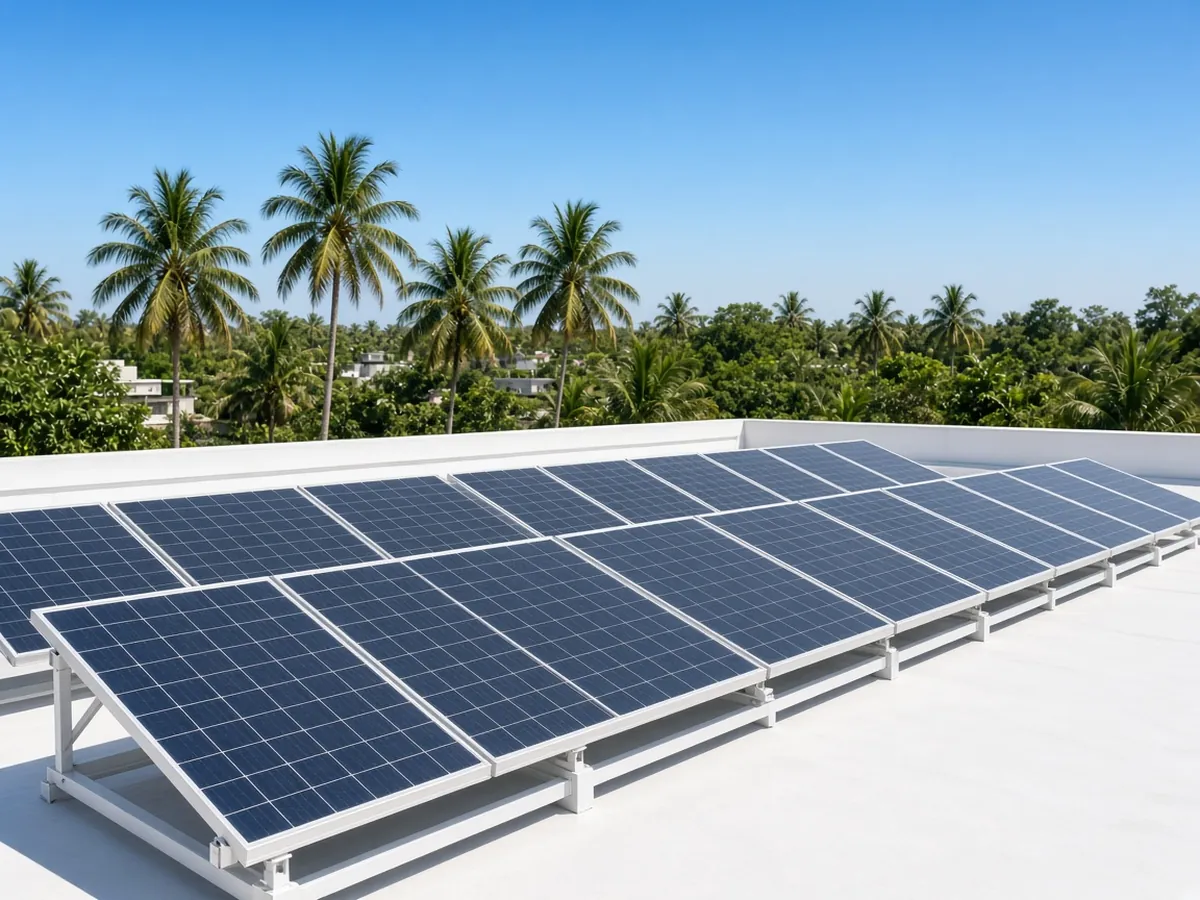
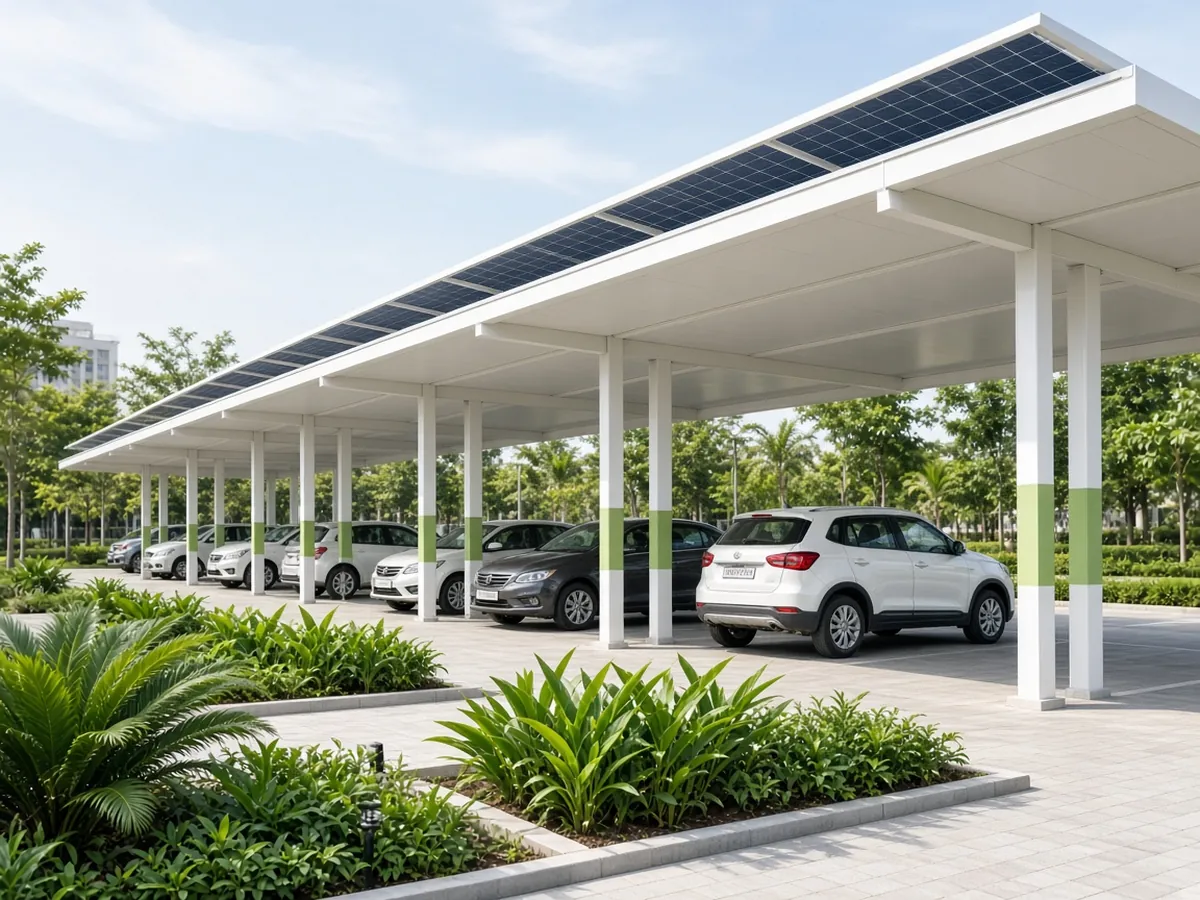
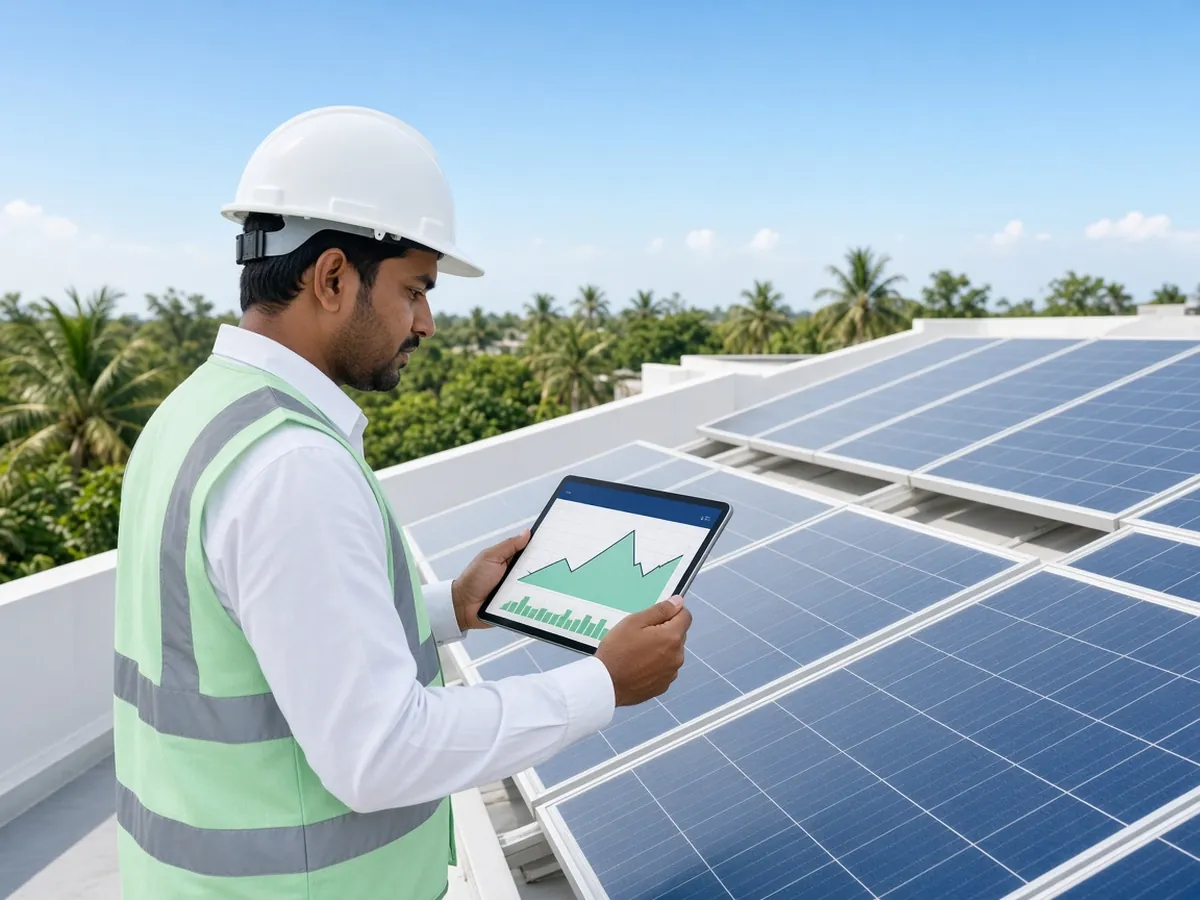
Illustrative images.
Scope of supply
Roof condition, shading, orientation and electrical connection review.
Panel layout, inverter selection and structure design for the site.
Systems for flat and sloped roofs on commercial and institutional buildings.
Canopies that shade parked vehicles and generate power.
Performance tracking so issues are spotted early.
Cleaning schedules, inspections and repairs.
Methodology
We inspect the roof or parking area and review energy use.
We prepare the layout, structure and electrical plan.
We support the documentation for the DISCOM net metering process.
Installation and commissioning by trained teams.
Ongoing monitoring, cleaning and upkeep.
Sectors served
Benefits
These benefits are qualitative. Actual outcomes depend on the site, its usage and the agreed scope.
Electricity generated on site from sunlight.
Roofs and parking areas become productive.
Canopies keep parked cars cooler.
Daytime generation can support chargers on the same site.
A clear, visible sign of a site’s sustainability effort.
Engagement models
Outright supply of specified equipment
Engineering, procurement and commissioning
Only where financially viable, subject to feasibility
The engagement model is agreed per project. Zero-capex and co-investment arrangements are offered only where the project is financially viable and a feasibility assessment supports it; they are not available for every site.
Frequently asked questions
For questions not covered here, please contact our team.
Suitability depends on free roof area, shading, roof strength and orientation. A site survey answers this before any design work starts.
It is a structure built over parking bays that holds solar panels. It shades vehicles and generates electricity from space that would otherwise be unused.
Mainly periodic cleaning and inspections, plus monitoring to catch faults early. We can take care of this after installation.
Solar can supply part of the daytime energy that chargers use, which lowers grid consumption on sites that have both.
We support the documentation for the DISCOM net metering process. Requirements, timelines and eligible system sizes vary by state regulator and electricity distribution company (DISCOM), and are confirmed for each site.
As a general guide, about 8 to 10 square metres of shade-free roof area is needed for each kilowatt of panels, depending on panel efficiency, tilt and spacing. A site survey confirms the usable area.
Payback depends on the system size, the site’s electricity tariff, how much of the generation is used on site, the applicable net metering terms and the installation cost. We share a site-specific estimate after the survey rather than a generic figure.
Good-quality panels are typically designed for a working life of around 25 years, with gradual reduction in output over time. Inverters usually need replacement earlier than panels. Warranty terms depend on the manufacturer.
Yes. Most systems include inverter-based or online monitoring that shows generation and flags faults, so that issues can be addressed early.
An on-grid system works with the electricity grid and usually exports surplus power under net metering. A hybrid system adds batteries, so some energy can be stored for use during outages or in the evening, at additional cost. The right choice depends on the site’s needs.
Our team will review your requirements and propose a suitable scope and engagement model.