Equipment sale
Outright supply of specified equipment
- Equipment sourced from established OEMs
- Installation and commissioning support
- Warranty support and optional maintenance (AMC)
06 Hydroponics
Hydroponics farming grows plants without soil, using nutrient-rich water. Anantham Online designs and sets up hydroponic systems for institutions, campuses, offices and communities, turning rooftops, terraces and unused spaces into sources of hyperlocal vegetables and fruits, and supports the people who look after them.
Overview
Hydroponics grows plants without soil: roots sit in a nutrient-rich water solution, in channels or towers that can go almost anywhere with light and access. That makes it well suited to rooftops, terraces and corners of a campus that are otherwise unused.
We design, set up and support hydroponic installations, so a site can grow fresh produce close to where it is eaten. That supports canteens, communities and local supply, and shortens the farm-to-table chain.
Fresh produce, grown close to where it is consumed.
In pictures
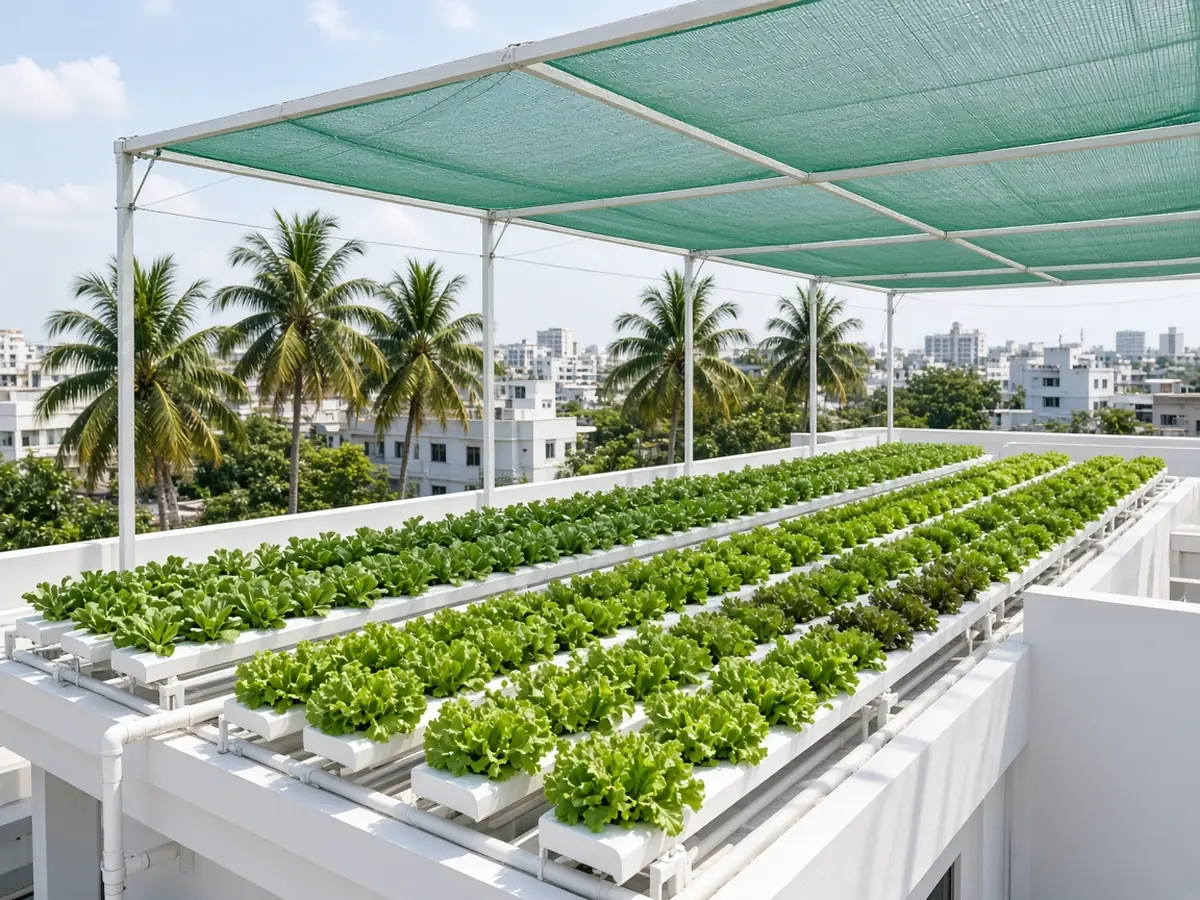
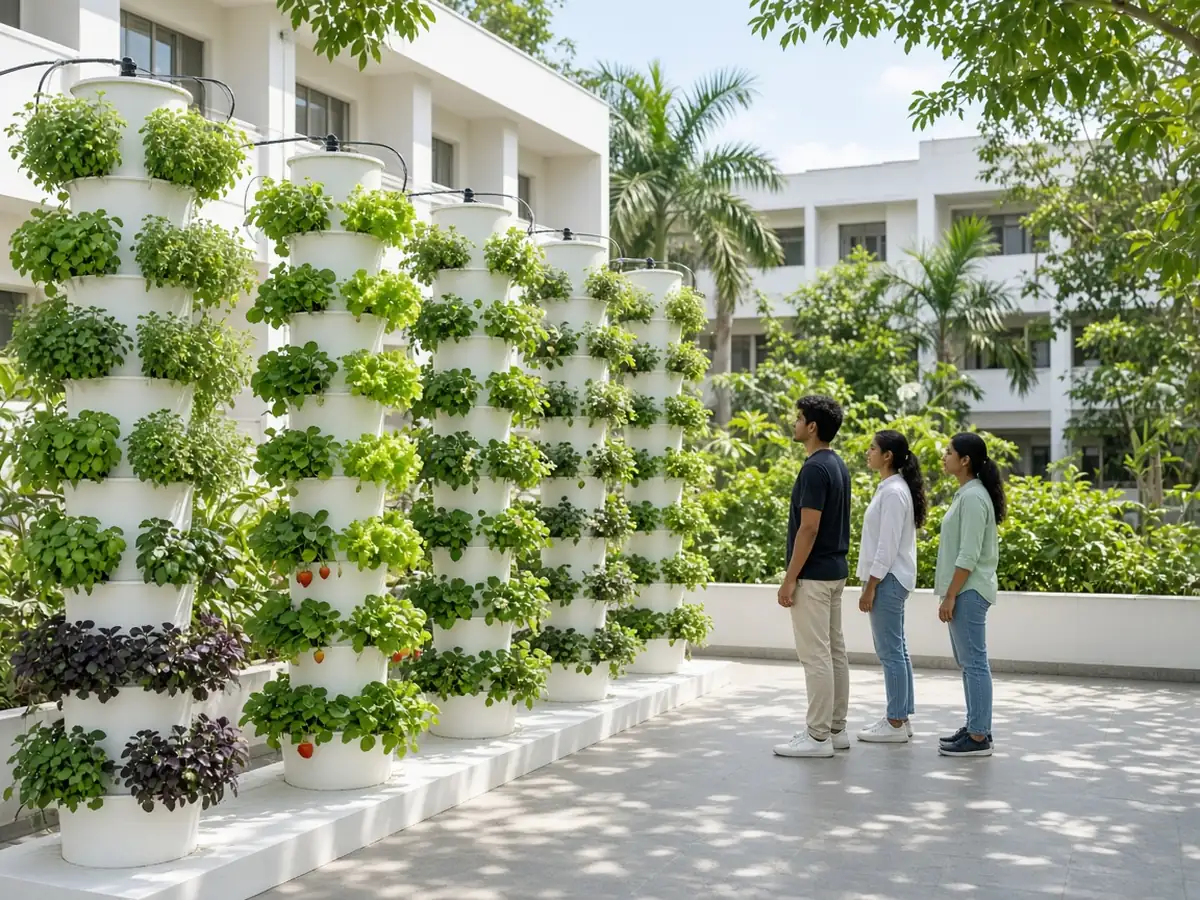
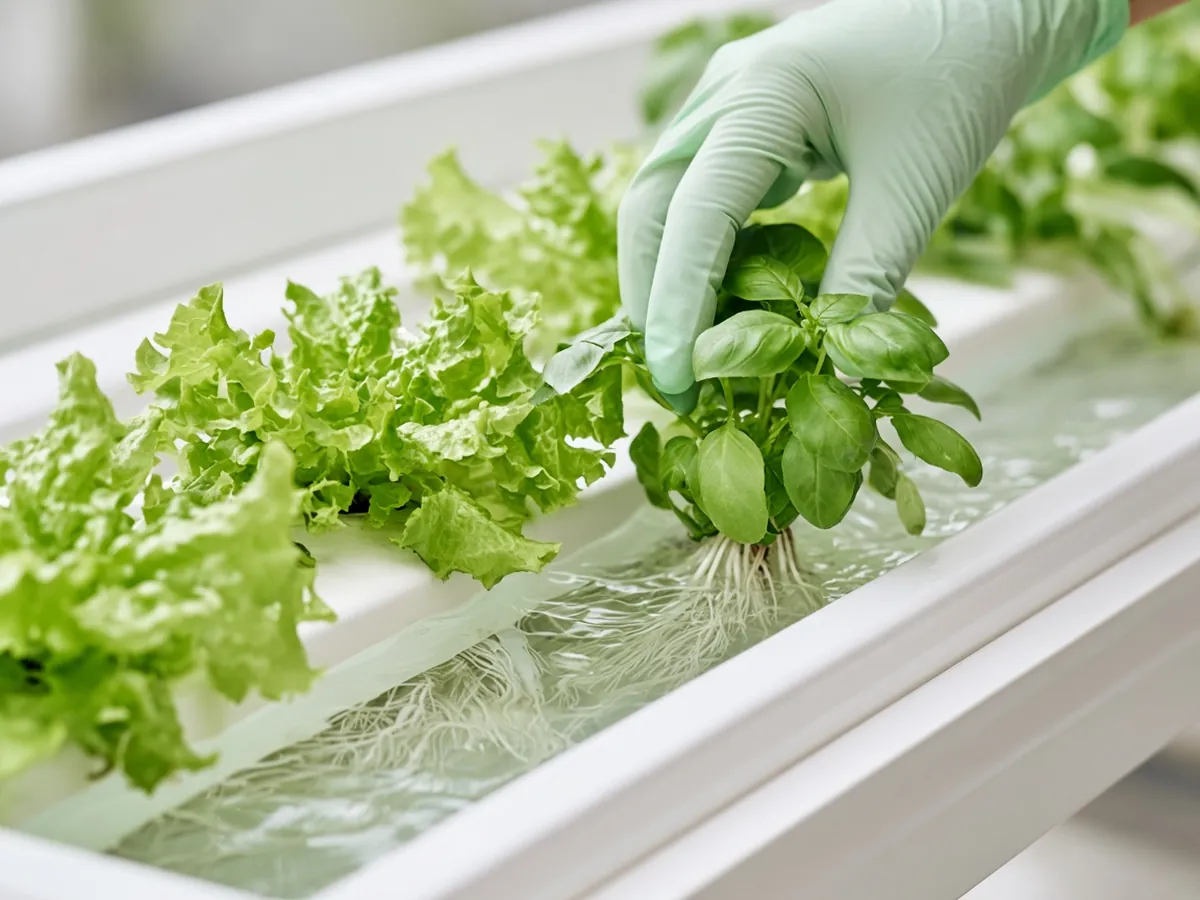
Illustrative images.
Scope of supply
Light, space, water and access review.
Channel, tower or rack systems sized to the space.
Structures, water circulation and nutrient systems.
Choosing suitable vegetables, herbs and fruits.
Hands-on guidance for the people who look after the system.
Methodology
Review the space, light and water access.
Choose the system type and layout.
Set up the structures and circulation.
Plant, monitor and adjust nutrients.
Ongoing help and maintenance.
Sectors served
Benefits
These benefits are qualitative. Actual outcomes depend on the site, its usage and the agreed scope.
Produce is grown close to where it is used.
Recirculating systems use water more efficiently than conventional soil growing.
Rooftops and terraces become green and useful.
Less transport between farm and table.
A visible, hands-on sustainability project.
Engagement models
Outright supply of specified equipment
Engineering, procurement and commissioning
Only where financially viable, subject to feasibility
The engagement model is agreed per project. Zero-capex and co-investment arrangements are offered only where the project is financially viable and a feasibility assessment supports it; they are not available for every site.
Frequently asked questions
For questions not covered here, please contact our team.
Hydroponics grows plants without soil, using a nutrient-rich water solution that feeds the roots directly. It suits rooftops, terraces and indoor spaces.
Yes, if the roof can take the load and gets enough light. A site assessment checks structure, light and water access first.
Leafy greens, herbs and many vegetables grow well. Some fruits such as strawberries and tomatoes can also be grown with the right system.
Recirculating hydroponic systems generally use water more efficiently than conventional soil-based growing, because water is reused instead of draining away.
Yes. We support installations with guidance for the people who look after them, and we provide ongoing help.
Yes. Hydroponics can be adapted to warm, humid conditions. Crop choice, shading and ventilation are planned for each site during the assessment.
It depends on the system type, size and site preparation. We give an estimate after assessing the space rather than quoting a generic figure.
Our team will review your requirements and propose a suitable scope and engagement model.